When the power fails, emergency lighting is what lets staff and customers find their way out safely. Most of the time it sits quietly in ceilings and above doors, which is exactly why it is easy to forget. Emergency lighting testing is a routine legal duty for most non-domestic premises in Scotland, and it is one of the first things a fire safety inspection will look at.
This guide is for business owners, office managers and venue operators in Edinburgh, from hospitality near the Castle and the Grassmarket to offices in the West End and Fountainbridge. It explains who is responsible, what tests are needed and how often, and what to do when a fitting fails.
Who Is Responsible for Emergency Lighting in Scotland
Fire safety in non-domestic premises in Scotland is governed by the Fire (Scotland) Act 2005 and the Fire Safety (Scotland) Regulations 2006. This differs from England, where most guidance refers to the Regulatory Reform (Fire Safety) Order 2005. If you have read advice written for English businesses, the principles are similar, but the legal framework is not the same.
Under the Scottish legislation, the person with control of the premises, often called the duty holder, must carry out a fire safety risk assessment and put suitable measures in place. That can be the employer, the business owner, a landlord, a managing agent or a factor, depending on who controls the building or the relevant part of it.
The Scottish Government’s practical fire safety guidance for non-residential premises explains that the need for emergency lighting depends on the size, type and risk of the premises, and points to BS 5266-1 as the relevant British Standard. In practice, most offices, shops, restaurants, bars and workplaces of any size will have some form of emergency escape lighting.
What Emergency Lighting Testing Involves
BS 5266-1 sets out a simple routine of regular checks and a longer annual test. Both matter, and both should be recorded.
The monthly functional test
Once a month, each emergency light should be briefly switched to battery operation to check that it lights up. This is usually done with a test key switch that simulates a mains failure. The test is short, just long enough to confirm that each fitting works, and many businesses train a member of staff to carry it out.
The annual full-duration test
Once a year, the system should be tested for its full rated duration, which is commonly three hours. This shows whether the batteries can still keep the lights on for as long as they are designed to. Batteries degrade over time, and a fitting that passes a brief monthly test can still fail long before the three hours are up.
Because the batteries need time to recharge afterwards, the annual test is best scheduled when the building is closed or quiet. For a busy restaurant near the Grassmarket or an office in Fountainbridge, that often means an early morning or a weekend.
Keeping a logbook
Every test, fault and repair should be written down in a logbook. Fire safety officers and insurers will ask to see it. A clear record also shows patterns, such as the same area failing repeatedly, which can point to a wiring problem or fittings that are simply worn out.
Common Emergency Lighting Faults
Most failures come down to a small number of causes. Knowing them makes the monthly check quicker and more useful.
Typical problems include:
- Batteries that no longer hold their charge for the full duration
- Failed lamps or LED drivers in older fittings
- Damaged or missing exit signs after refurbishment work
- Fittings that were removed or covered during a fit-out and never reinstated
- Escape routes that changed after an office reconfiguration, leaving areas uncovered
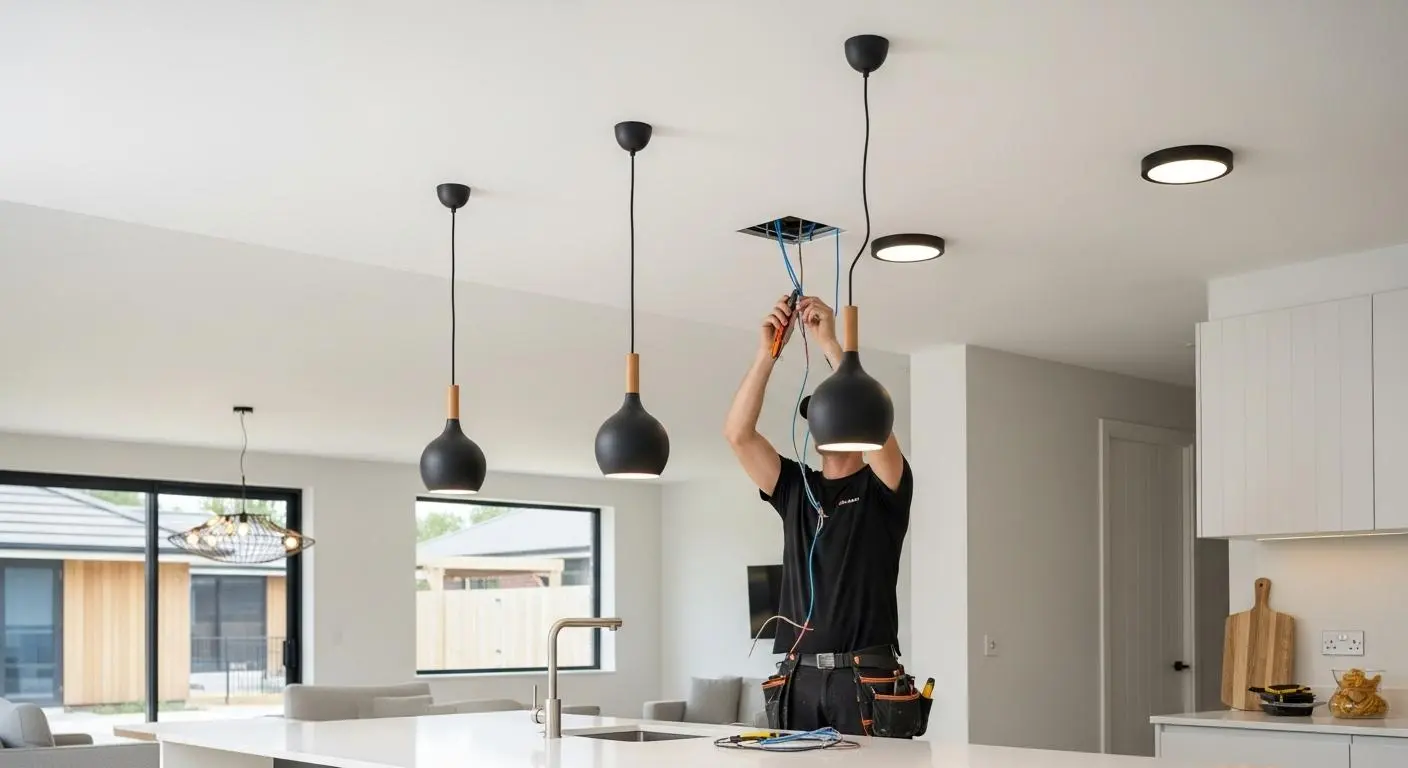
That last point is easy to miss. When a shop or office is refitted, partitions move and new rooms appear, but the emergency lighting layout often stays the same. Office refits that include new lighting, such as this office lighting and data cabling project, are a good moment to review emergency coverage. If your premises has changed since the system was installed, it is worth checking that coverage still matches your escape routes and your fire risk assessment.
Upgrading Older Emergency Lighting Systems
Older fluorescent emergency fittings use more energy, need more frequent lamp changes and are increasingly difficult to repair. Replacing them with LED fittings usually brings lower running costs, longer battery life and a cleaner appearance.
Self-test systems are another option. These fittings run their own monthly and annual tests and indicate faults automatically, which reduces the time staff spend on manual checks. You still need someone to check the indicators and keep the records, but the routine becomes far easier to manage across larger buildings.
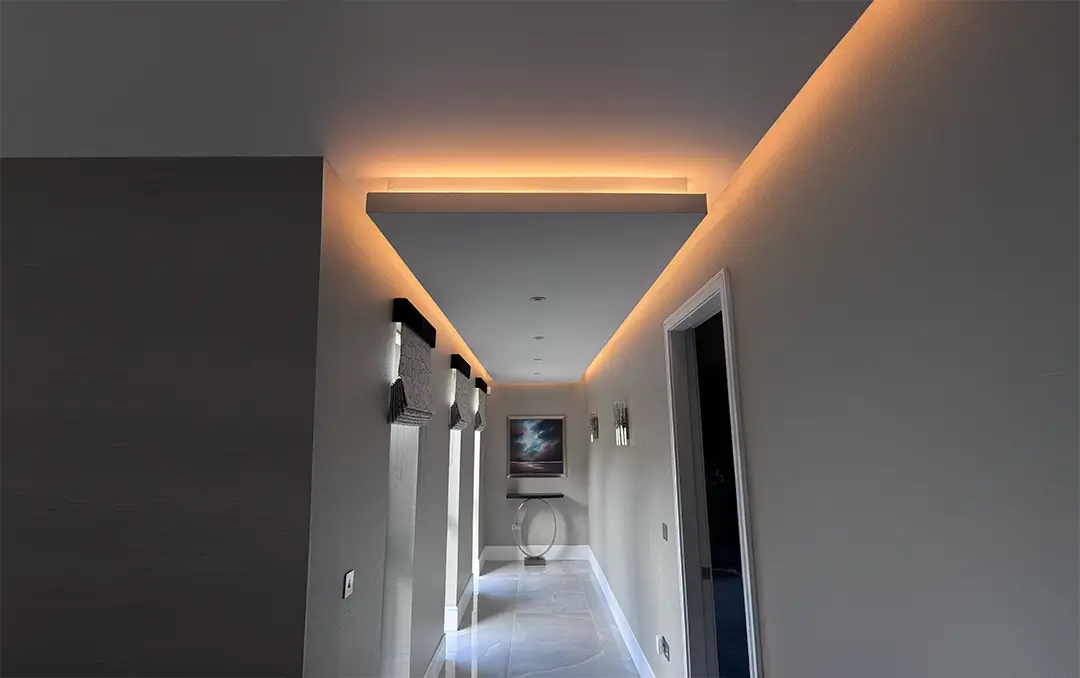
An upgrade is also a good time to review the layout against current standards and your current floor plan. Our commercial lighting installation service covers the design and installation of new emergency and general lighting, and testing can be built into a planned maintenance contract afterwards.
How Emergency Lighting Fits Into Your Wider Compliance
Emergency lighting is one part of a wider set of electrical safety checks. Your fixed installation needs periodic inspection through an EICR, portable equipment may need PAT testing, and your fire alarm system has its own testing routine. Coordinating these checks saves time and avoids gaps.
Our guide to how often commercial premises need an EICR explains the recommended intervals for different types of business. Our compliance testing service brings EICRs, emergency lighting tests and PAT testing together under one plan.
Keeping all of these records in one place, alongside your fire risk assessment, makes inspections straightforward and gives you a clear view of what is due and when.
Conclusion
Emergency lighting testing is not complicated, but it does need to be done consistently. A brief monthly check, a full annual duration test and a well-kept logbook will cover the core requirements for most Edinburgh businesses. When fittings start to fail regularly, or your layout has changed, it is time to look at an upgrade rather than another round of repairs.
Nexum Electrical Solutions provides commercial electrical services in Edinburgh, including emergency lighting testing, repairs and LED upgrades for offices, shops and hospitality venues in the West End, Fountainbridge and beyond. To arrange testing or a system review, request a quote and we will plan it around your opening hours.
Frequently Asked Questions
How often should emergency lighting be tested?
BS 5266-1 recommends a short functional test every month and a full-duration test, commonly three hours, once a year. Both should be recorded in a logbook. Your fire risk assessment may also identify additional checks for higher-risk premises.
Can my own staff carry out emergency lighting tests?
A competent member of staff can usually carry out the monthly functional test once they have been shown how. The annual full-duration test, repairs and any changes to the system are best carried out by a qualified electrician, who can also issue the appropriate certificates.
What happens if an emergency light fails its test?
The fault should be recorded and repaired as soon as possible. Until it is fixed, you may need temporary measures, such as limiting the use of an area, depending on your fire risk assessment. Repeated failures are often a sign that batteries or fittings have reached the end of their life.
Do small businesses need emergency lighting?
It depends on the premises. The Scottish Government guidance links the need for emergency lighting to the size, layout and risk of the building, and the decision should come from your fire risk assessment. Many small shops and offices still need at least some emergency lighting on escape routes.